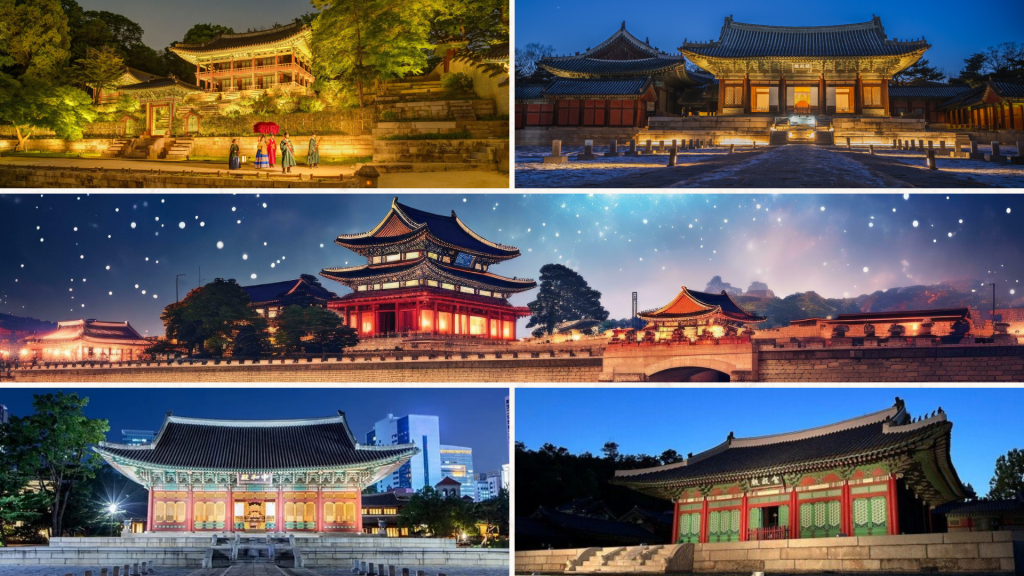
When visiting Seoul, the legacy of the Joseon Dynasty (1392–1897) is everywhere. Among its most enduring landmarks are the Five Grand Palaces: Gyeongbokgung, Changdeokgung, Changgyeonggung, Deoksugung, and Gyeonghuigung. Each palace has its own story, shaped by over 500 years of dynastic history, wars, and reconstruction.
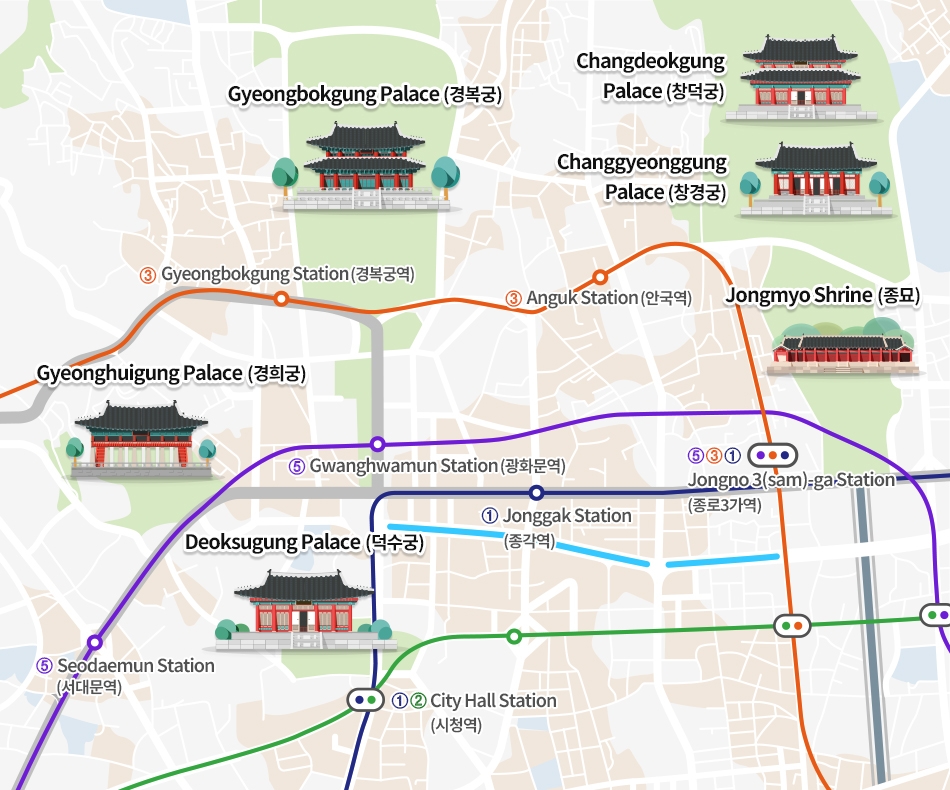
The dynasty’s first main palace, Gyeongbokgung, was built in 1395. Soon after, the Princes’ Rebellion led to the construction of Changdeokgung, establishing a two-palace system to ensure stability in times of crisis. Later, Changgyeonggung was built as a residence for a retired king and royal family members. All three were destroyed during the Imjin Invasions of 1592, prompting the temporary use of Gyeongungung (later renamed Deoksugung) and the later construction of Gyeonghuigung. In the late 19th century, Gyeongbokgung was restored to symbolize royal authority, but by 1910 the dynasty fell under Japanese rule. What remains today are five palaces that reflect both South Korea’s royal heritage and its history.
Here’s a ranking of the five palaces, from the most iconic to the most understated.
1. Gyeongbokgung Palace (경복궁) – The Jewel of Seoul
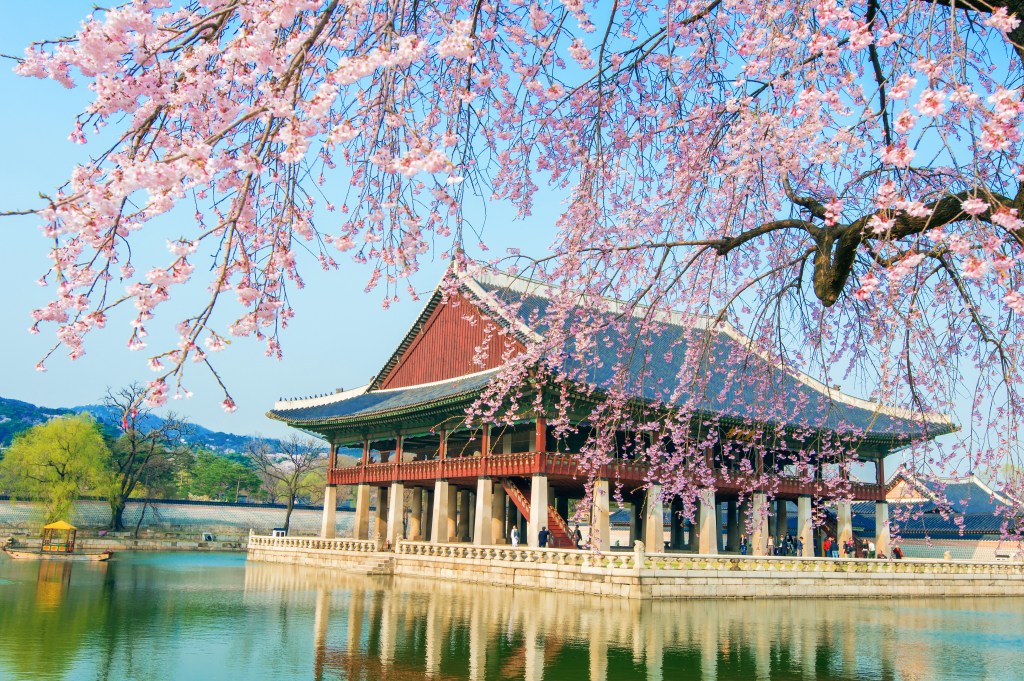
The grandest and most famous of the five, Gyeongbokgung Palace was constructed in 1395, just three years after the founding of the Joseon Dynasty. As the dynasty’s main royal palace, it was the seat of power where the king lived and governed, and where court rituals and national ceremonies took place. Its name means “Palace Greatly Blessed by Heaven,” symbolizing the dynasty’s ambitions for longevity and prosperity.
Despite its early grandeur, Gyeongbokgung suffered greatly during the Japanese invasions of 1592, when it was burned to the ground. For more than 250 years, the ruins stood abandoned, until King Gojong ordered its restoration in the 19th century as a symbol of royal authority. Unfortunately, this revival was short-lived: during Japanese occupation in the early 20th century, much of the palace was again dismantled or destroyed, with only a fraction surviving today. Restoration efforts continue even now, gradually bringing it closer to its former glory.

Today, visitors can explore magnificent halls like Geunjeongjeon (the throne hall), where major state functions occurred, and the Gyeonghoeru Pavilion, set on an artificial pond and used for royal banquets. The picturesque Hyangwonjeong Pavilion, with its arched wooden bridge and lotus pond, offers a tranquil escape within the palace grounds. Beyond its architecture, the palace grounds also host the National Palace Museum and the National Folk Museum, adding cultural and historical depth to a visit.
Nearby & Things to Do:
- Bukchon Hanok Village – traditional hanok houses, cafés, and galleries
- Insadong – antique shops, art stores, and street snacks
- Samcheong-dong – boutique shopping and trendy cafés
- Hanbok rental for immersive cultural photos and free palace entry


Pros: iconic, rich history, daily guard-changing ceremony
Cons: busiest of all palaces, needs several hours to explore fully
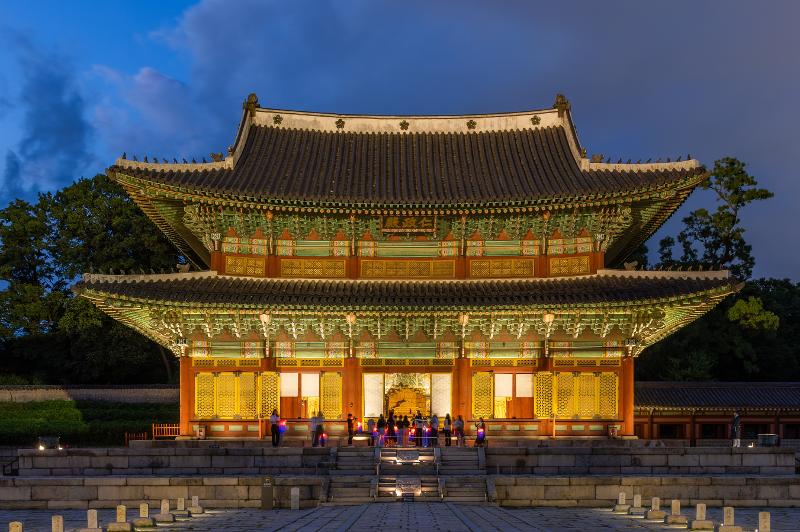
2. Changdeokgung Palace (창덕궁) – A UNESCO World Heritage Gem
Built in 1405 as a secondary palace, Changdeokgung became the favored royal residence after the destruction of Gyeongbokgung in 1592. For nearly 270 years, most Joseon kings lived and ruled here, making it the true heart of royal life during much of the dynasty. Unlike Gyeongbokgung’s grandeur, Changdeokgung is renowned for its natural harmony—the palace was designed to follow the contours of the landscape, blending architecture with the surrounding hills, forests, and streams.
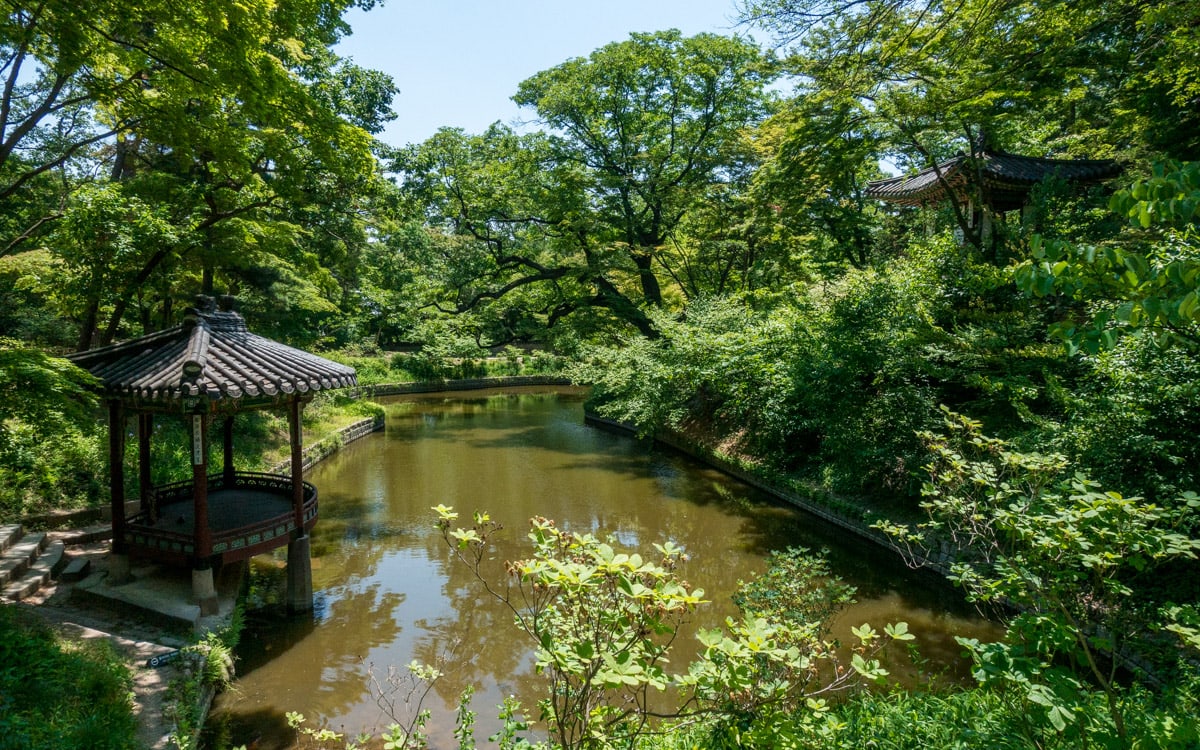
The palace’s jewel is the Huwon (Secret Garden), a vast 78-acre landscaped garden once reserved exclusively for the royal family. Featuring lotus ponds, secluded pavilions, and 300-year-old trees, the garden was a private retreat where kings studied, wrote poetry, and sought respite from the pressures of rule. Buildings such as Injeongjeon Hall (the throne hall), Seonjeongjeon Hall (where daily affairs of state were handled), and Nakseonjae Hall (the residence of later royals) add layers of elegance and history to the complex.
In 1997, Changdeokgung was designated a UNESCO World Heritage Site, recognized as the best-preserved Joseon palace and celebrated for its perfect integration of architecture and natural landscape. To this day, it remains a favorite for visitors who seek beauty, romance, and authenticity.
Nearby & Things to Do:
- Changgyeonggung Palace – adjacent and often combined in one visit
- Jongmyo Shrine – UNESCO site of royal ancestral rituals
- Ikseon-dong Hanok Village – hip cafés, boutiques, and art shops

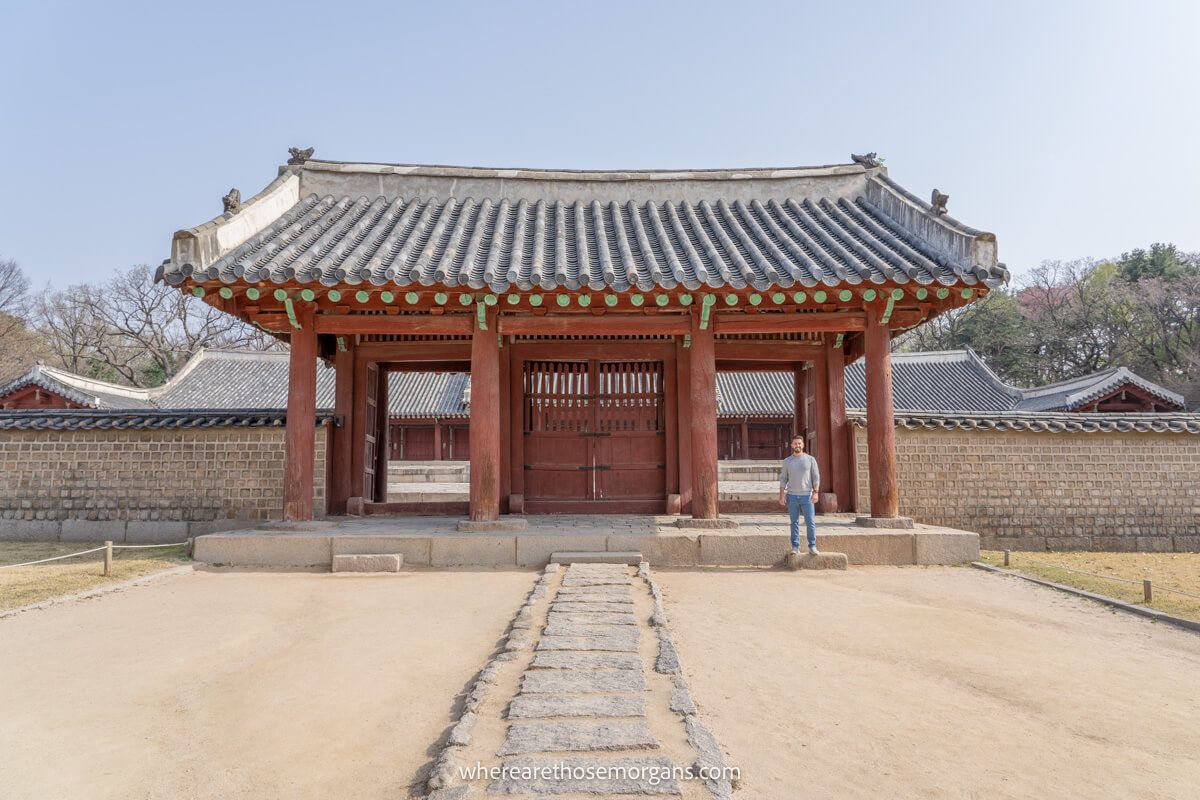

Pros: best-preserved palace, atmospheric, tours of the Secret Garden
Cons: Secret Garden access restricted by guided tours, popular with tourists
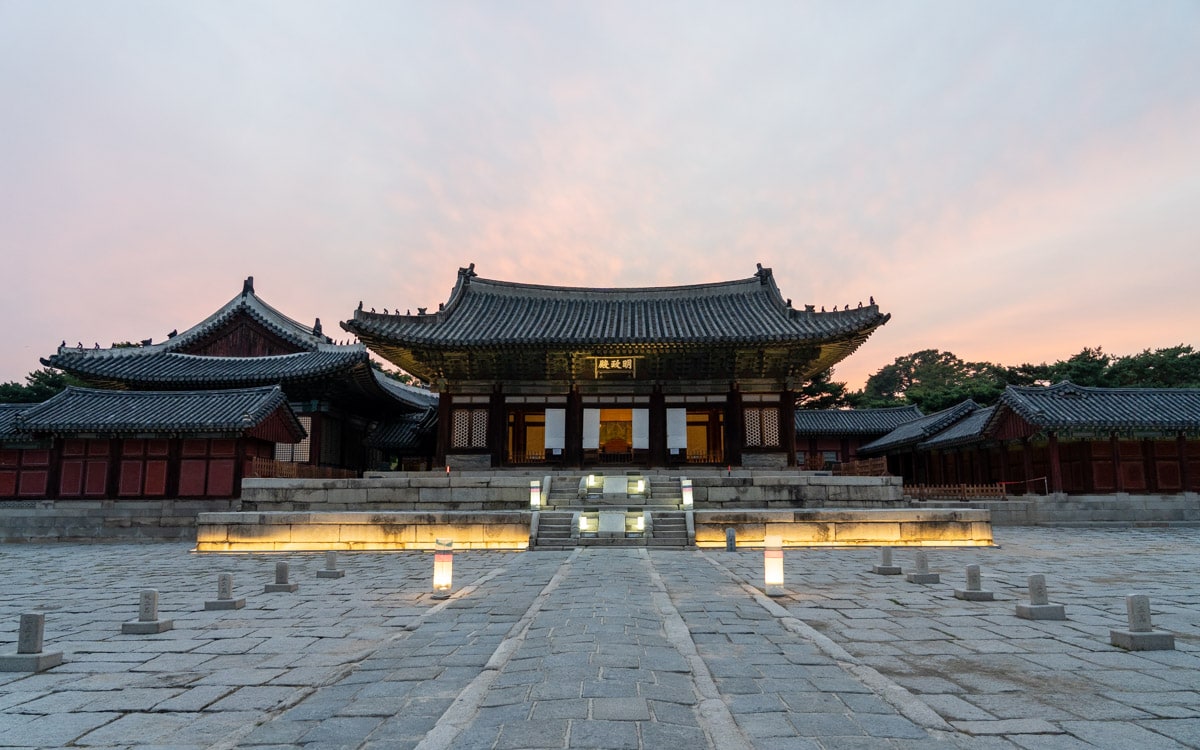
3. Changgyeonggung Palace (창경궁) – Intimate and Underrated
Built in the mid-15th century by King Sejong for his retired father, Changgyeonggung was originally known as “Suganggung” before being renamed under King Seongjong. Unlike the other palaces designed for governance, Changgyeonggung primarily functioned as a residential palace for queens, dowagers, and concubines, making it more intimate in scale and focus.
Changgyeonggung too was devastated during the 1592 invasions and rebuilt shortly after. However, its most dramatic transformation came during the Japanese occupation, when the colonial authorities turned the grounds into a public park, complete with a zoo and botanical garden. Though this undermined its royal dignity, it also ensured its survival when other palaces were demolished. Today, parts of that history remain visible, such as the beautiful Daeonsil (Great Greenhouse) built in 1909—the first Western-style greenhouse in Korea.
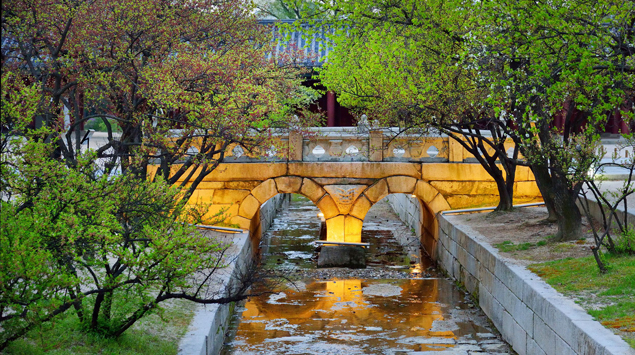
Though smaller than its sister palaces, Changgyeonggung’s Honghwamun Gate, Okcheongyo Bridge, and tranquil ponds offer a charming experience, especially during spring cherry blossom season or autumn foliage. Its quiet paths and compact grounds make it a comfortable palace to stroll through without feeling overwhelmed.
Nearby & Things to Do:
- Connected directly to Changdeokgung Palace
- Seoul Children’s Museum & Science Museum (on palace grounds)
- Jongno 3-ga food alleys – authentic eateries and pojangmacha tents


Pros: quieter and less crowded, lovely gardens, greenhouse landmark
Cons: less imposing than others, zoo history lingers in memory
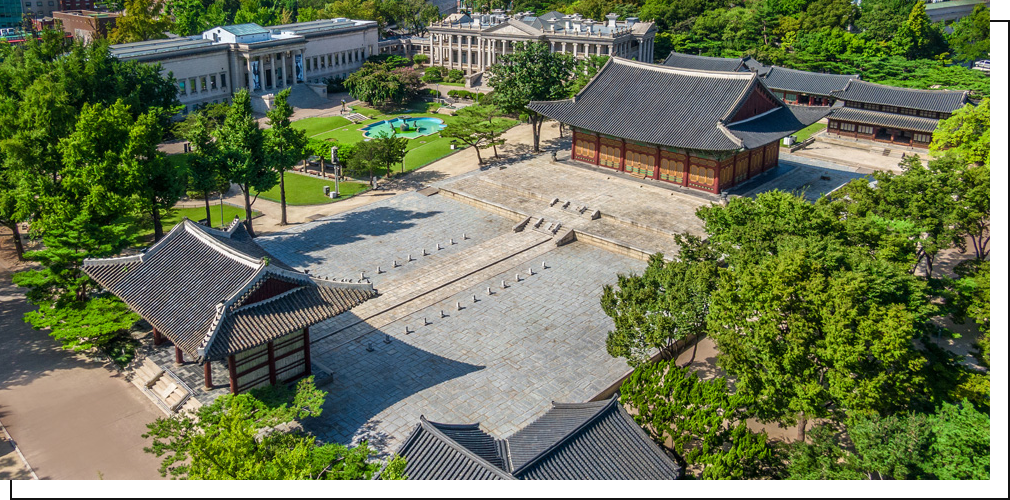
4. Deoksugung Palace (덕수궁) – Where Tradition Meets Modernity
Originally a prince’s residence, Deoksugung became a royal palace in 1593 when King Seonjo needed a new seat after the destruction of the main palaces during the Imjin War. Unlike the sprawling compounds of Gyeongbokgung or Changdeokgung, Deoksugung is compact and uniquely shaped by Korea’s transition into modern times. Its name, meaning “Palace of Virtuous Longevity,” was given in 1907 during the reign of Emperor Gojong.
What sets Deoksugung apart is its blend of traditional Korean and Western architecture. Alongside wooden throne halls and pavilions stands the Seokjojeon Hall, a neoclassical stone building designed by a British architect, used for diplomatic receptions and royal meetings. The Jeonggwanheon Pavilion, designed by a Russian architect, was where King Gojong enjoyed coffee and discussions with foreign envoys. This fusion reflects Korea’s turbulent late 19th century, caught between tradition and rapid modernization.
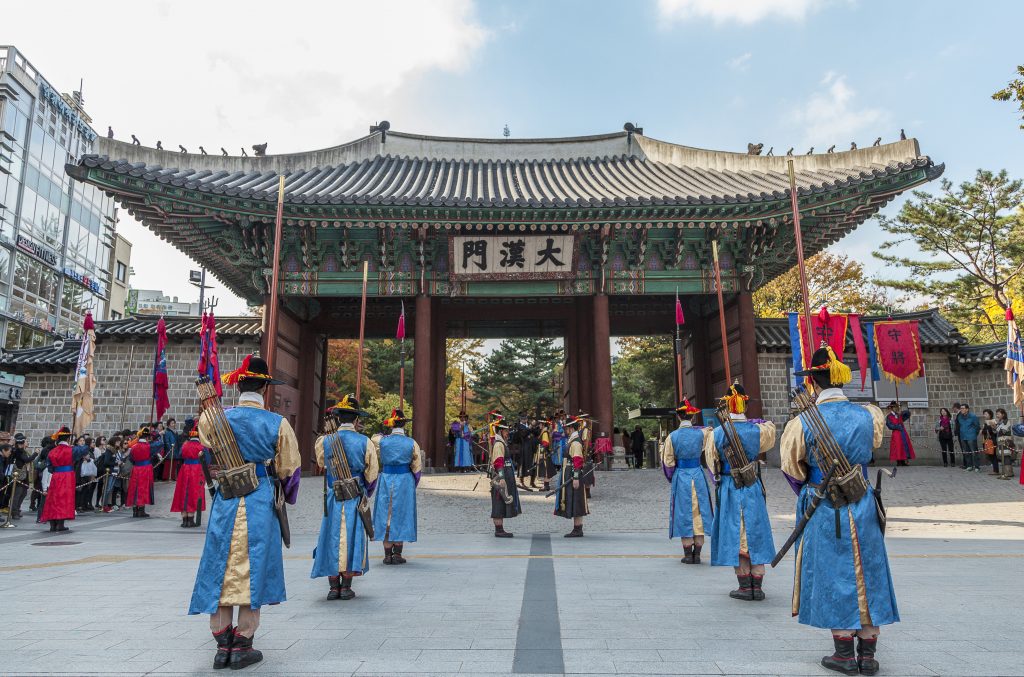
Today, Deoksugung is especially beloved for the changing of the royal guard ceremony, performed daily in colorful Joseon uniforms. Its central location in downtown Seoul also makes it one of the most accessible palaces, with the romantic Deoksugung Stone Wall Road being a favorite walking path for couples and office workers alike.
Nearby & Things to Do:
- Deoksugung Stone Wall Road – a scenic walkway around the palace
- Seoul Plaza & City Hall – cultural events, winter ice rink
- Jeongdong Theater & Observatory – cultural performances and rooftop views
Pros: central location, unique architecture, daily guard ceremony
Cons: much smaller, many original buildings lost to history

[Gyeonghuigung (Historic Site No. 271), 55, Saemunan-ro, Jongno-gu, Seoul]
5. Gyeonghuigung Palace (경희궁) – The Forgotten Palace
The youngest of the five, Gyeonghuigung was built in the early 17th century as a secondary palace used in emergencies. During its peak, it was a sprawling complex of nearly 200 buildings and served as the residence of over ten Joseon kings. Its name means “Palace of Serene Harmony,” reflecting its role as a safe and stable retreat.
Tragically, Gyeonghuigung suffered repeated disasters. A fire in 1829 destroyed many of its structures, and what survived was dismantled or repurposed during Japanese colonial rule, when the site was turned into schools and government offices. Today, only a few reconstructed buildings remain, such as Heunghwamun Gate and Sungjeongjeon Hall, offering a faint echo of its former importance.
Despite its modest appearance now, Gyeonghuigung offers a quieter, reflective visit away from the crowds of other palaces. It also houses the Seoul Museum of History, which provides excellent exhibits on the capital’s development, and open walking paths that invite peaceful exploration.
Nearby & Things to Do:
- Seoul Museum of History – exhibitions on Seoul from Joseon to modern era
- Gwanghwamun Square – statues of King Sejong & Admiral Yi Sun-sin
- Seochon Village – cozy restaurants, craft shops, and local galleries


Pros: free entry, peaceful, educational museum
Cons: very few surviving structures, less visually striking
Each palace tells a different chapter of Korea’s royal story: Gyeongbokgung for grandeur, Changdeokgung for harmony, Changgyeonggung for intimacy, Deoksugung for East-West fusion, and Gyeonghuigung for resilience.
If you’re short on time, prioritize Gyeongbokgung and Changdeokgung. For a quieter stroll, try Changgyeonggung or Gyeonghuigung, and for something different, Deoksugung offers a rare glimpse of Korea’s modernization era.
Each palace is a living window into the rise, trials, and transformation of Korea’s history.
Best Season to Visit Seoul’s Palaces
- Spring (March to May) and Autumn (September to November) are widely considered the best times to visit Seoul, especially its palaces like Gyeonghuigung and sites like Okcheongyo Bridge.
- Spring offers cherry blossoms and mild weather, while autumn brings vibrant foliage and traditional festivals like Chuseok.
- All five grand palaces in Seoul—including Gyeonghuigung—are especially stunning in spring, when the colorful dancheong (traditional paintwork) is complemented by blooming flora.
🧭 Tips for First-Time Travelers
- Wear comfortable shoes: Palace grounds can be vast and involve lots of walking.
- Avoid Mondays: Most palaces are closed on Mondays, except Gyeongbokgung, which closes on Tuesdays.
- Hanbok rentals: Wearing a hanbok (traditional Korean attire) gets you free entry to many palaces.
- Culture Day: On the last Wednesday of each month, palace entry is free for everyone.
 Foreigner Living in Korea
Leave a comment